

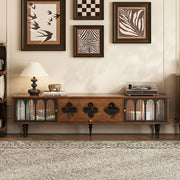

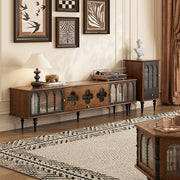

- 21%
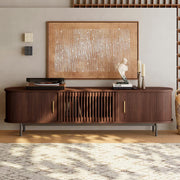

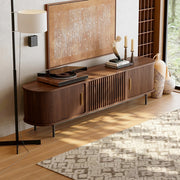

- 23%


- 21%




FAQs About Mid Century TV Stands
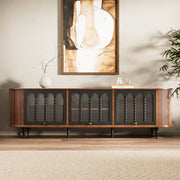
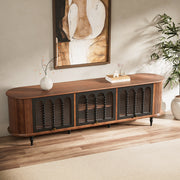
A mid century TV stand typically features a low, horizontal silhouette, raised legs or an elevated base, and warm wood tones such as walnut. The style traces back to 1950s–60s furniture design, where clean lines and practical storage were prioritized over ornamentation. Sliding doors, fluted panels, and subtle geometric details are common characteristics.
Not necessarily. Many mid century designs use a combination of solid wood framing and plywood or engineered cores for stability. Veneer surfaces are also common, especially for achieving consistent walnut grain across wide panels. Construction quality matters more than whether every surface is solid wood.
For a 65-inch TV, a console between 60 and 75 inches wide usually works well. The stand should be at least slightly wider than the television to maintain visual balance and prevent the setup from looking top-heavy.
They can work very well in small spaces. Because the style emphasizes raised legs and clean lines, mid century media consoles often feel lighter than bulky floor-to-ground cabinets. Sliding doors are also practical in tighter layouts where swing clearance is limited.
Walnut and other warm-toned woods are the most common. You’ll often see:
- Solid wood frames
- Multilayer wood (plywood) cabinet bodies
- Walnut veneer finishes
- Rattan or fluted door detailing
The combination helps balance durability, stability, and aesthetic consistency.
For a deeper breakdown of construction and material differences, read our guide on real wood vs veneer in mid century TV stands.
Veneer is a thin layer of real wood applied over a core material. Plywood is made from multiple thin wood layers pressed together for structural stability. In many mid century TV stands, veneer is applied over plywood to create a stable yet visually refined surface.
Yes. Sliding doors were popular in original mid century cabinetry because they allow easy access without requiring extra clearance space. They’re especially useful in compact living rooms.
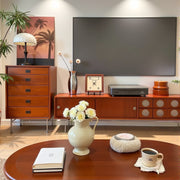
Neutral tones like cream, beige, and soft gray complement walnut finishes well. For a stronger contrast, muted olive or deep blue can highlight the warmth of the wood without overpowering the room.
Mid century design has remained relevant for decades because it emphasizes proportion, natural materials, and functional storage. While finishes may evolve, the silhouette itself has proven timeless.