









Most sofa bed regrets don’t come from looks or price. They come from noise and movement—creaking when you sit, wobbling when you turn, or subtle instability that makes the piece feel “never quite settled.” These problems usually show up within days, not years. And they’re rarely caused by choosing the “wrong” material. This guide explains what actually makes a sofa bed quiet and stable in daily use, and how to spot those qualities before you buy.
Why “Quiet” and “Stable” Matter More Than Material Labels
A sofa bed is used differently from almost any other piece of furniture. It supports static loads while sitting, dynamic loads while converting, and distributed loads while sleeping. When something feels off—noise, flex, or vibration—it interrupts daily life immediately. That’s why stability and noise are not long-term durability concerns; they are early-failure issues.
Material labels like solid wood or metal frame are easy to market, but they don’t explain how the structure behaves once weight is applied. What matters is whether the structure controls movement where it should and allows movement only where it must.
The Common Misunderstanding: Wood vs. Metal Is the Wrong Question
Almost every modern sofa bed uses both wood and metal. Treating them as opposing choices oversimplifies the problem and hides the real failure points.
What Wood Usually Does in a Sofa Bed
Wood is typically used in the outer frame: arms, back, and perimeter rails. Its job is to resist twisting and give the sofa a unified, grounded feel when you sit down. When done well, a wood frame makes the sofa feel calm and solid, even before the bed mechanism comes into play.
Problems arise when the wood is poorly dried or weakly joined. Seasonal expansion, loose fasteners, or insufficient corner reinforcement can introduce small movements. Those movements don’t always threaten strength, but they do create sound and visual instability—exactly the things people notice first.
What Metal Usually Does in a Sofa Bed
Metal is used where movement and concentrated loads are unavoidable: folding mechanisms, support decks, and structural crossmembers. Steel handles repeated motion and weight transfer more predictably than wood.
Noise in metal structures is rarely about the metal itself. It comes from gaps—tiny tolerances at hinges, pivots, or bolted joints. When those gaps exist, movement turns into sound. The sharper the contact, the more noticeable the noise.
Where Noise Actually Comes From (And Why It’s So Hard to Fix Later)
Once a sofa bed starts making noise, it’s difficult to eliminate completely. Most noise originates from a few specific sources.
Metal-on-Metal Contact at Moving Joints
Hinges, pivot points, and sliding components are designed to move, but only within a controlled range. If tolerances are loose or surfaces are left unisolated, metal parts rub or tap against each other. This produces the sharp, repetitive sounds people describe as “creaking” or “clicking.”
Looseness at Fasteners and Connection Points
Bolts and screws that are not properly reinforced can develop play under repeated loading. Each small shift becomes audible. Tightening hardware may help temporarily, but if the structure relies on fasteners alone without secondary reinforcement, the noise often returns.
Wood-to-Metal Friction in Hybrid Frames
Many sofa beds combine wood slats or panels with metal supports. When these parts rub under load, friction noise develops. This is common in designs where wood and metal meet without isolation layers. The structure may be strong, but the interface is not quiet.
Stability Is About Load Paths, Not Just Strength
A sofa bed feels stable when weight travels predictably from the user to the floor. Instability happens when that path is interrupted.
Continuous vs. Fragmented Load Transfer
Well-designed sofa beds distribute weight across multiple contact points. This reduces stress on any single joint and minimizes movement. Poor designs concentrate load at a few hinges or brackets. The structure may meet weight ratings, but it flexes perceptibly.
Why Some Sofa Beds Wobble Even When They’re “Strong Enough”
Strength tests measure whether something breaks. Stability is about whether it moves. A frame can support significant weight and still feel unsteady if forces are unevenly distributed. That sensation—subtle rocking or shifting—is often what triggers early dissatisfaction.
The Role of Joinery and Assembly Quality
Materials don’t determine performance on their own. Connections do.
Wood Joinery: Drying and Reinforcement Matter
Kiln-dried hardwood resists seasonal movement better than improperly dried wood. Reinforced joints—using dowels, corner blocks, or metal brackets—prevent torsion and reduce noise over time. Staples and glue alone rarely hold up under repeated conversion and load changes.
Metal Connections: Precision Beats Thickness
Thicker steel doesn’t guarantee stability. Precision does. Tight tolerances, proper welds, and well-designed fasteners keep parts aligned. When metal components fit correctly, they stay quiet. When they don’t, even heavy frames can sound hollow or loose.
A Clean, Practical Take on the Modern Sofa Bed
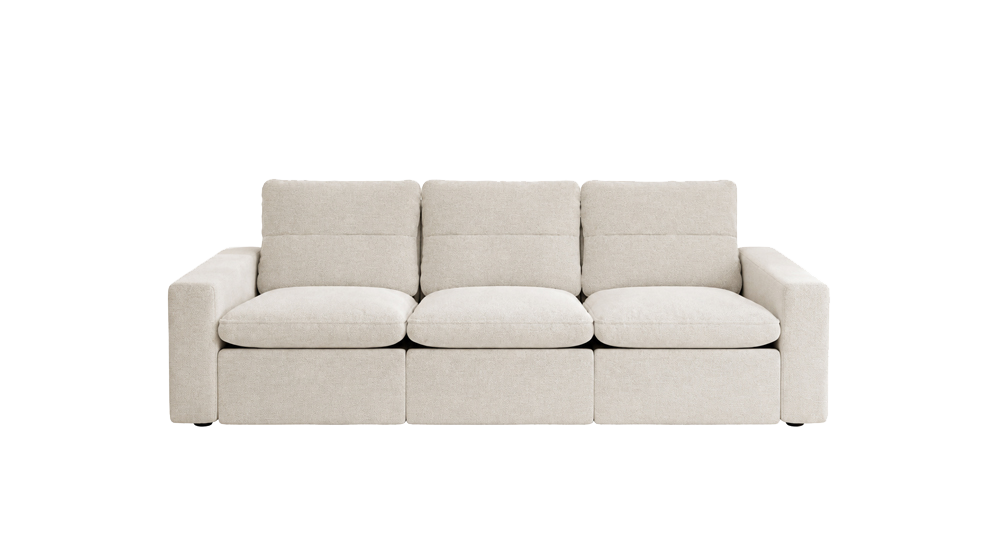
This minimalist sofa bed offers a quiet, stable conversion from sofa to bed, designed for everyday use in compact spaces. The streamlined structure reduces movement and noise, while integrated side pockets keep essentials close. A neutral fabric finish allows it to blend easily into modern living rooms or guest spaces.
Modern Minimalist Style Sofa Bed
Trade-Offs: Why Quiet, Stable Sofa Beds Are Never the Lightest or Cheapest
Noise control and stability require material, mass, and precision. These add cost and weight.
Heavier frames tend to feel calmer because they absorb vibration instead of transmitting it. Additional reinforcement reduces movement but increases manufacturing complexity. Lightweight designs are easier to ship and assemble, but they leave less margin for error.
Choosing a sofa bed is often about deciding where you accept compromise. If silence and steadiness matter, weight and price usually rise.
Who Should Prioritize a Quiet, Stable Sofa Bed the Most
Not every user has the same tolerance for movement and sound.
-
Light sleepers notice small noises immediately.
-
Shared households are more affected by nighttime movement.
-
Small apartments amplify sound and vibration.
-
Frequent converters stress mechanisms more quickly.
For these users, structural calm is not a luxury. It’s functional.
How These Principles Shape Arrtle’s Design Decisions
At Arrtle, the design process starts by separating parts that must move from parts that must remain still. Movement is confined to mechanisms designed for it. Everything else is engineered to resist motion.
Wood frames are used to create visual and structural calm. Metal mechanisms are reinforced, isolated, and constrained to their functional zones. The goal is not to eliminate motion—sofa beds must move—but to control it so that daily use feels predictable and quiet.
This approach reflects the idea that good furniture should fade into the background of life. When a piece constantly announces itself through noise or instability, it fails its role.
A quiet, stable sofa bed isn’t defined by a single material choice. It’s defined by restraint—by keeping movement where it belongs and eliminating it everywhere else. That’s what actually matters.
FAQ: Quiet & Stable Sofa Bed Questions, Answered
1. Is a metal frame sofa bed always noisier than a wood frame one?
No. Metal frames are not inherently noisy. What causes noise is uncontrolled movement—small gaps at hinges, pivots, or fasteners that allow parts to rub or tap against each other. Metal simply makes these issues more audible because metal-on-metal contact produces sharper sounds than wood-on-wood contact.
A well-built metal mechanism with tight tolerances and proper isolation can be quieter than a poorly joined wood frame. Material alone is not a reliable predictor of noise.
2. Why does my sofa bed start creaking even though it feels solid and strong?
Strength and stability are not the same thing. Many sofa beds meet weight requirements but allow micro-movements at joints or connections. These movements don’t cause failure, but they do create sound.
Creaking usually means load is shifting where it shouldn’t—often at fasteners, hinge points, or where wood and metal meet without isolation. Once these movements exist, noise tends to appear early and persist.
3. Can tightening screws or lubricating joints fix a noisy sofa bed?
Sometimes, but usually only temporarily.
If noise is caused by loose fasteners, tightening may help. Lubrication can reduce friction at metal joints, but it does not fix poor alignment or structural play. In many cases, noise returns because the underlying issue is design-related, not maintenance-related.
This is why quietness is best evaluated before purchase, not corrected afterward.
4. Are heavier sofa beds always more stable and quieter?
Not always, but weight often helps.
Heavier frames tend to absorb vibration better and feel more grounded, especially during movement. That said, weight alone doesn’t guarantee stability. Poor load distribution or weak joints can still cause wobble and noise, regardless of mass.
Think of weight as a contributing factor, not a solution.
5. Do hybrid sofa beds (wood + metal) make more noise over time?
Hybrid designs are not the problem. Poorly managed interfaces are.
Most sofa beds are hybrid by necessity: wood for the outer frame, metal for the mechanism. Noise develops when these materials interact without proper isolation—such as wood slats rubbing against metal rails under load.
High-quality hybrid designs control these contact points so materials do not fight each other during use.
6. How Can You Tell If a Sofa Bed Will Be Quiet Before Buying It?
You usually can’t—not with certainty. And that’s not because you’re missing something. It’s because most sofa bed product pages don’t give you enough structural information to judge noise in advance.
This is not accidental. Detailed explanations of frame construction, joint reinforcement, or mechanism tolerances rarely appear in marketing copy because they are difficult to explain, easy to compare, and often reveal cost-saving decisions. As a result, shoppers are asked to choose based on fabric, style, and mattress descriptions, while the parts that actually control movement remain largely invisible.
Because of that, the goal is not to “identify a quiet sofa bed,” but to avoid designs with a higher risk of becoming noisy.
There are a few practical signals you can evaluate, even when technical details are missing.
Extremely lightweight sofa beds are easier to ship and advertise, but they leave little mass to absorb vibration. Lightness is not a flaw on its own, yet when combined with minimal reinforcement, it often correlates with higher noise risk.
So, when structural information is missing, uncertainty itself becomes part of the decision. In those cases, the most reliable risk-control tools are not specifications but policies: clear return terms, realistic trial periods, and access to unfiltered user feedback that mentions noise or wobble after short-term use.
A quiet sofa bed is not something you can confirm from a spec sheet. It’s something you reduce the risk of choosing.