

.png?w=999&h=999)
.png?w=999&h=999)
.png?w=999&h=999)

.png?w=999&h=999)
.png?w=999&h=999)
.png?w=999&h=553)
Today’s dining spaces do more than host meals—they flex with real life. Breakfast rushes, laptop work sessions, weekend guests… everything happens around the table. That’s why extendable dining tables have become a go-to choice for modern homes: compact when life is quiet, generous when the crowd arrives.
The key is choosing one that fits not just your floor plan, but the way you actually live. This guide walks you through that decision with practical, design-forward insight.
The Real-Life Problems an Extendable Dining Table Solves
In many 600–700 sq ft apartments—whether in Seattle, Austin, or any growing city—the dining area is rarely a defined room. It’s the transition zone between the kitchen island and the sofa, doubling as a walkway, an office, and a dining spot. A large 70–80" table overwhelms this space; a compact 42–55" table works until friends decide to drop by.
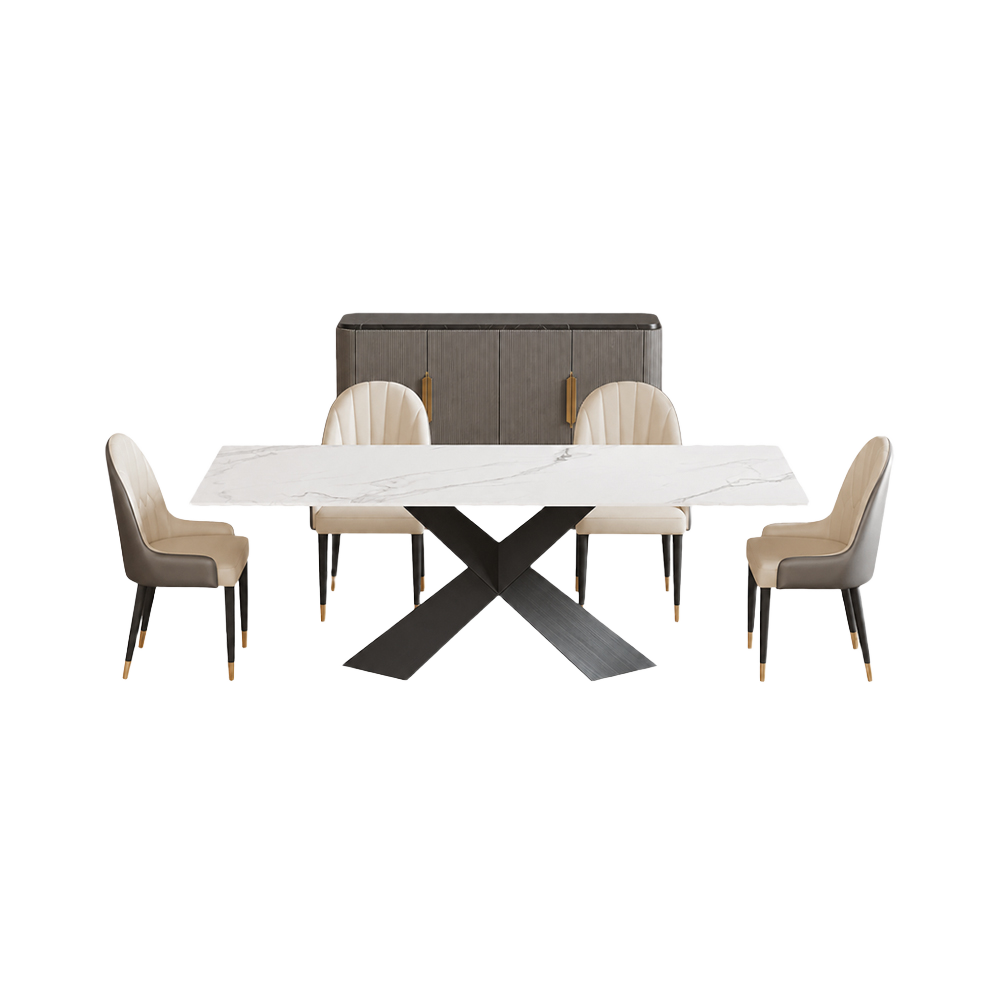
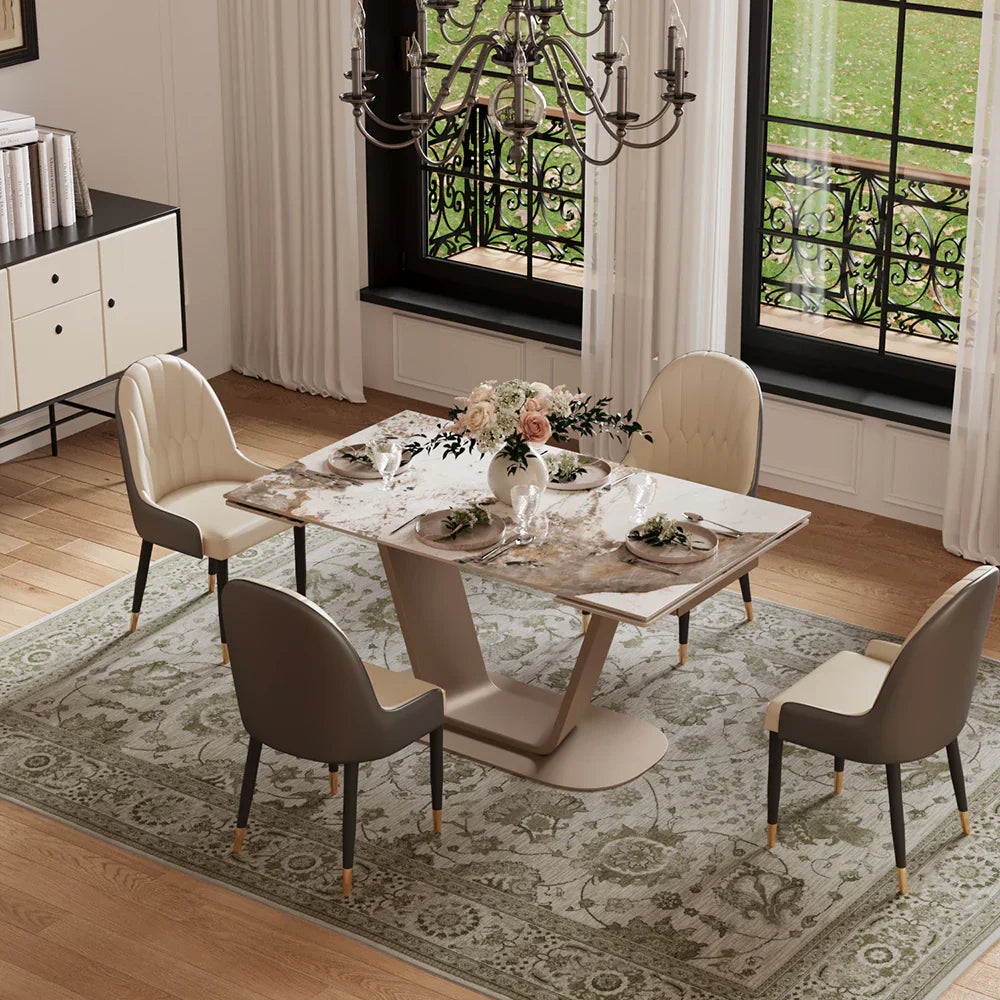
This is where an extendable table becomes transformative. It allows a small home to behave like a larger one only when necessary. A 58" table that extends to 81"—like Arrtle patterned sintered-stone design—creates a kind of “spatial elasticity.” For daily life it stays compact, preserving openness. For gatherings, it expands instantly, without visually crowding the room.
Families face a different challenge—not space, but multipurpose demand. Today, a dining table is expected to survive toddler spills, craft projects, homework, laptops, hot dishes, and weekend hosting. Beautiful solid wood tables often look amazing on day one but quickly show dents, heat rings, and stains. Here, material becomes the quiet hero. Sintered stone offers the durability families need—resisting heat, scratches, markers, and spills—allowing the table to function without anxiety.
For entertainers, the issue is preparation. A fixed four-seater can turn dinner parties into a puzzle of mismatched stools and crowding. An extendable table creates a sense of intention. Instead of improvising, your home feels ready. Guests sit comfortably, food has a proper place, and hosting becomes about connection—not logistics.
What Makes an Excellent Extendable Dining Table
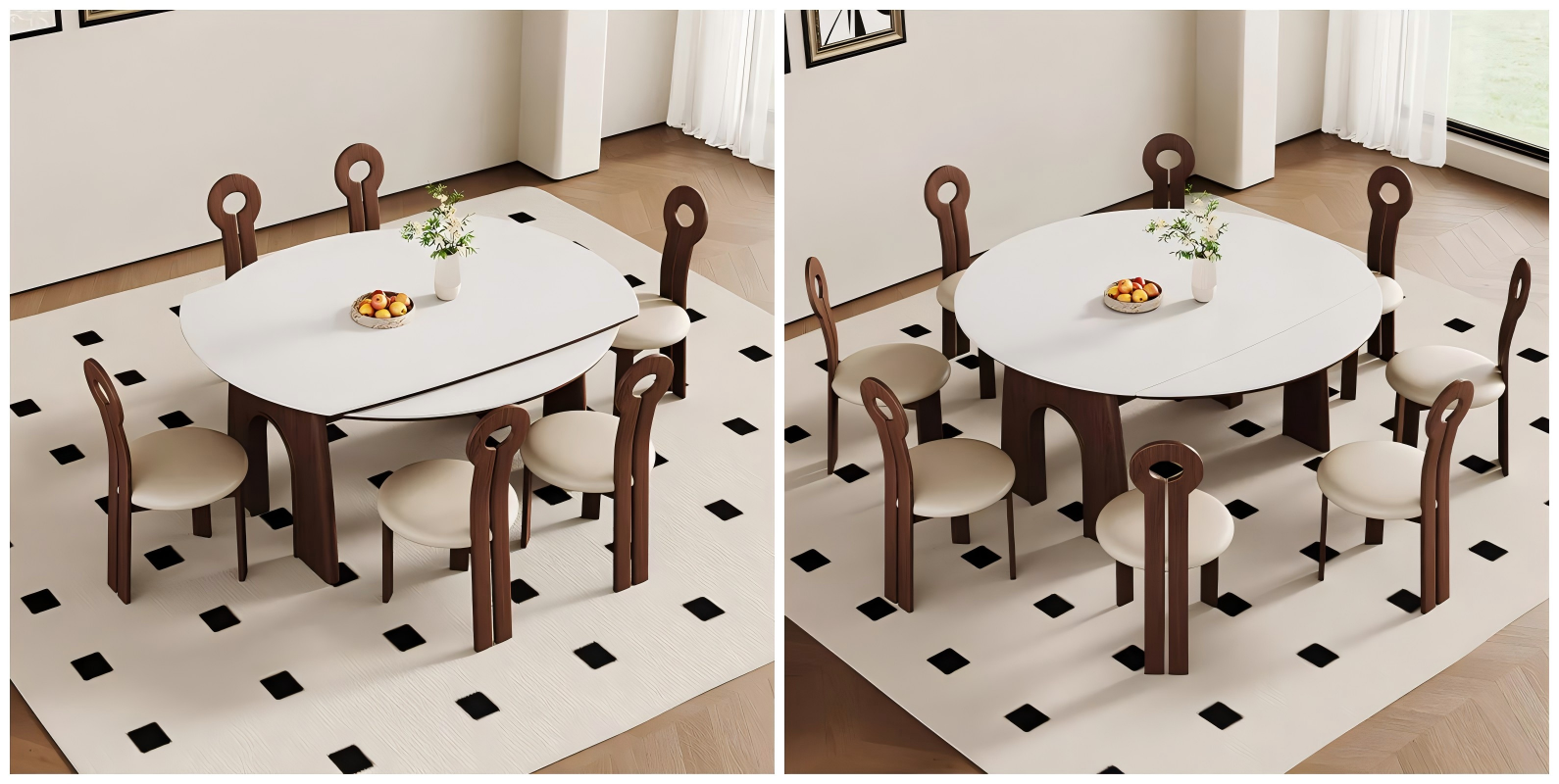
When evaluating an extendable dining table, length is only the beginning. We should pay attention to the extension mechanism, the stability of the frame, the durability of materials, and how the table interacts with the room’s architecture.
1. The Extension Mechanism
This is the heart of an extendable table, yet often the most overlooked. A good mechanism determines how smoothly the table opens, how stable it feels when extended, and whether one person can operate it without effort.
Butterfly Leaf (fold-in): A butterfly leaf is ideal for frequent, no-fuss use. The leaf is stored inside and folds open like a book—quick, compact, and perfect for narrow dining areas.
Drop-In Leaf (panel insert): Drop-in leaves, though extremely stable, suit homes where hosting is occasional. They require storage and more setup steps, but when used a few times a year—such as during holidays—they perform beautifully.
Drawleaf Extension (Refectory): An elegant design where the leaves are mounted beneath the main tabletop and slide out from the ends, then lift up to sit flush with the main surface. It offers a very seamless and solid look when closed.
Synchronized Metal Glide Rails (used in modern stone tables): In premium designs, particularly those with heavy stone tops, synchronized metal glide rails have become the gold standard. Both ends of the table move together with one smooth pull. Even with a stone surface, the mechanism opens effortlessly, remaining solid and steady when fully extended. For anyone who hosts regularly, this mechanism delivers the most refined experience.
2. Material Matters
The surface of a dining table is a daily-use tool, not a showroom piece. Your material determines:
-
whether hot coffee damages it
-
whether kids’ forks leave scratches
-
if wine spills become permanent marks
-
how it ages over five to ten years
Sintered stone has risen in popularity because it’s practically impervious to the stresses of a busy home—heat, spills, knives, and impact. It maintains its appearance for years with almost no maintenance, making it especially suited for families, entertainers, or small homes where the dining table serves many functions.
Solid wood, on the other hand, offers warmth and character. It develops a patina that many homeowners appreciate. But it requires care and acceptance of imperfections.
Wood veneer delivers the look of wood but with less durability. It works well for lighter household use, but in busy homes, it tends to show wear more quickly.
The True Complexity: Making the Table Fit the Room
Most buying guides skip this, but room layout determines whether an extendable table enhances daily life or becomes a frustration.
A designer’s rule of thumb ensures comfort and circulation:
Table length + 72" = minimum room length needed.
Why 72"?
Because it includes space for chairs to pull out and enough clearance to walk comfortably behind them.
Using the Arrtle 58" → 81" extendable dining table as an example:
-
At 58", it fits comfortably in most small apartments.
-
At 81", it’s ideal for open-plan living rooms or townhouses where occasional large gatherings occur.
This simple measurement prevents common layout mistakes—like narrowing walkways or forcing guests to sidestep around chairs.
Real Use-Case Scenarios (The Deepest, Most Practical Part)
To visualize how an extendable table behaves, consider these real American home scenarios:
In a 700 sq ft apartment with an 8' × 10' dining area, the table stays at 58" most days, doubling as a work desk and dining spot. For casual weekend hosting, it briefly extends. During holidays, it shifts slightly toward the living room, reaching 81" without compromising circulation.
In a suburban family home, the table transforms across seasons of life. It supports homework, crafts, and snacks during the week. For birthday parties, it expands to display food and gifts. On Thanksgiving, it extends fully to seat eight comfortably, becoming the center of the celebration.
For frequent entertainers in a modern townhouse, the table becomes part of the home’s identity. Partially extended, it sets the stage for wine nights; fully extended, it balances with a centered pendant light and supports formal dinners with ease.
Each scenario shows the same truth: an extendable dining table makes a home more functional, more adaptable, and more enjoyable—without demanding more square footage.
Style Integration: How the Table Shapes the Room
We also evaluate how a table interacts with flooring, lighting, chairs, wall colors, and circulation. A patterned stone top, like Arrtle’s, becomes a visual anchor. With the right styling—light walls, a minimalist pendant, slim-leg chairs, and a soft, neutral rug—it brings presence without overwhelming the space.
The goal is balance: creating a strong focal point that still allows the room to feel open and calm.
Budget Guide: What to Expect at Each Price Point
When clients ask, “How much should I budget for an extendable dining table?” the honest answer is: it depends on what you expect the table to survive. Materials, mechanisms, and long-term durability shift dramatically as the price climbs. Here’s how the market typically breaks down.
1. $300–$700: The Entry-Level Tier
At this range, most tables are built from MDF or wood veneer with lightweight hardware. They look good on day one, but the finish is often thin, the extension mechanisms can feel stiff, and daily wear shows quickly. For renters or short-term living situations, these pieces offer value—but they’re not designed for a decade of use, nor for heavy hosting.
2. $700–$1,500: The Mid-Range Sweet Spot
This bracket upgrades you to more stable construction—usually improved veneer work, mixed materials, and smoother, more reliable extension systems. For first homes, small families, or buyers wanting better function without stretching the budget, this tier delivers a noticeably better experience. However, surfaces can still be sensitive to heat, scratches, and spills if used heavily.
3. $1,500–$3,000: Premium Performance
Here, the difference becomes obvious the moment you extend the table. You’ll find sintered stone tops, solid woods, stainless steel bases, and synchronized glide mechanisms that open with a single, balanced pull. These tables feel substantial, stay stable when fully extended, and are built for high-traffic households—families, entertainers, and anyone who wants their dining table to remain beautiful for years, not months.
This is also the category where design meets durability: clean lines, architectural bases, and finishes that resist stains, heat, and scratches.
The Most Future-Proof Dining Choice
An extendable dining table is not merely a piece of furniture but an adaptable living tool. It allows small apartments to feel spacious, family homes to stay functional, and hosting spaces to become more intentional and welcoming. As homes continue to shift and multitask, a thoughtfully chosen extendable table becomes a long-term investment in versatility, comfort, and beautiful everyday living.